How Much RAM Does a Gaming PC Really Need in 2024?
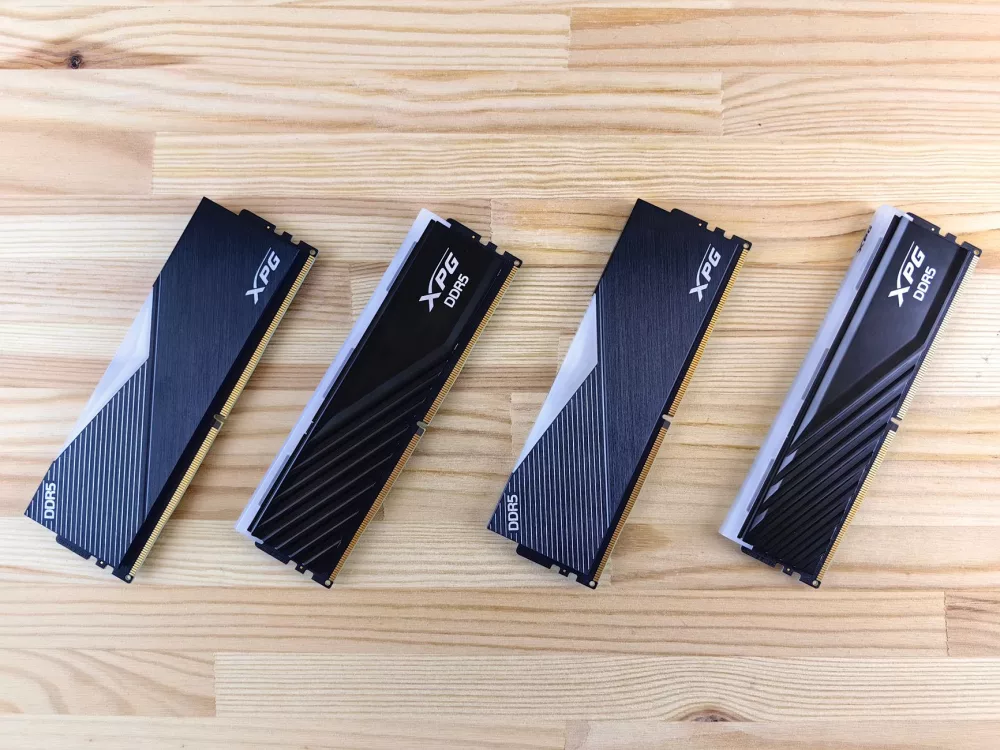
Demystifying RAM: Your Gaming PC's Memory Sweet Spot
Hey there, fellow gamers and PC enthusiasts! We've all been there, staring at spec sheets, scratching our heads, and wondering, "Just how much RAM does my gaming rig *actually* need?" It's a question that pops up constantly, and honestly, the answer isn't always a simple one-size-fits-all. But don't sweat it, because I'm going to break down everything you need to know about RAM for gaming in today's landscape. We'll explore what it does, how much you should consider, and why some configurations are better than others.
You see, Random Access Memory, or RAM, isn't where your games are stored long-term. That's your hard drive or SSD's job. Instead, RAM acts as a super-fast, temporary workspace for your computer. When you launch a game, the necessary data quickly loads from your storage into RAM. Your CPU and GPU then constantly access this data to render graphics, process game logic, and generally keep things running smoothly. Think of it like your desk: you pull out the books and notes you're actively using and place them right there, instead of constantly running back to the bookshelf.
The Bare Minimum: 8GB RAM
Alright, let's talk about 8GB of RAM. Can you game with it? Absolutely! Many popular esports titles like Valorant, League of Legends, and CS:GO run perfectly fine on 8GB. Even some older AAA games might be playable, though you might have to dial back the settings a bit. If you're building on an extremely tight budget, or if you primarily play less demanding titles, 8GB can get you by. However, I'd say this is really the absolute floor for a gaming PC in 2024. You'll likely notice stuttering if you try to multitask—say, running Discord, a browser with multiple tabs, and a modern AAA game all at once. It just gets a bit cramped, you know?
The Sweet Spot: 16GB RAM
Now, if you ask me for a recommendation that hits the sweet spot for the vast majority of gamers, it's 16GB of RAM. This amount offers an excellent balance of performance, cost, and future-proofing for current-generation games. With 16GB, you'll find that pretty much every modern AAA title runs smoothly without significant memory bottlenecks. You can usually have Discord open, a few browser tabs, maybe even a streaming service in the background, and your game will still perform admirably. For most people, this is enough. It's what I generally suggest to friends who are building a new mid-range gaming machine. You're not overspending, and you're getting a really solid experience across the board.
For Enthusiasts & Multitaskers: 32GB RAM
So, who needs 32GB of RAM? Well, if you're like me and often find yourself juggling a million things at once—think streaming your gameplay, editing videos, running virtual machines, or having dozens of browser tabs open while playing a demanding game—then 32GB starts looking really appealing. Modern, graphically intensive games, especially those running at higher resolutions like 1440p or 4K, can certainly benefit from the extra headroom. Games like Starfield, Microsoft Flight Simulator, or Cyberpunk 2077, particularly with high-resolution texture packs, can really chew through memory. Getting 32GB isn't strictly necessary for *just* gaming right now, but it definitely offers a comfort blanket for those who push their systems hard or want maximum future-proofing. Plus, if you're doing content creation alongside gaming, it's almost a no-brainer.
Overkill (For Most Gamers): 64GB+ RAM
When we talk about 64GB or even 128GB of RAM, we're moving into very niche territory for gaming. For 99.9% of gamers, this is pure overkill. Seriously, it won't give you any noticeable performance advantage in games over 32GB, and sometimes even over 16GB. The scenarios where this much RAM is genuinely beneficial involve heavy professional workloads like massive video editing projects, 3D rendering, scientific simulations, or running multiple enterprise-level virtual machines simultaneously. Unless you have specific, resource-intensive professional needs that coincide with your gaming habits, save your money and invest it in a better GPU or CPU instead. You'll see much bigger gains there.
What About RAM Speed and Timings?
It's not just the *amount* of RAM that matters; its speed and timings play a role too! Faster RAM (measured in MHz, e.g., 3200MHz, 3600MHz) can provide a noticeable uplift in frame rates, especially for CPUs that are more sensitive to memory performance, like AMD's Ryzen processors. Lower timings (often expressed as CAS Latency or CL, e.g., CL16, CL18) are also better, indicating how quickly the RAM can respond to requests. While it might not be a huge leap, getting a decent kit, say 3200MHz CL16 or 3600MHz CL18, often offers better value than just getting the cheapest option. Always remember to enable XMP (Extreme Memory Profile) in your motherboard's BIOS to ensure your RAM runs at its advertised speeds, as it often defaults to slower speeds otherwise!
Factors to Consider When Deciding
When you're making your choice, keep these things in mind:
- Your Budget: This is always a big one. 16GB is the best bang for your buck.
- Games You Play: Are they older, lighter titles or cutting-edge AAA blockbusters?
- Resolution: Higher resolutions often mean more VRAM usage on your GPU, but also slightly more system RAM demand.
- Multitasking Habits: Do you always have tons of apps open?
- Future-Proofing: How long do you want this PC to last without upgrades?
Honestly, getting enough RAM in dual-channel configuration (using two sticks of RAM instead of one for better performance) is probably more important than squeezing out a few extra megahertz. Most motherboards have four RAM slots, so you could start with two 8GB sticks for 16GB and then add two more later if you feel the need. It's a flexible approach.
So, What's the Verdict?
In conclusion, for most gamers today, 16GB of RAM is the optimal choice. It provides ample memory for all current games and handles typical multitasking with ease. If you're a heavy multitasker, content creator, or simply want absolute peace of mind and don't mind spending a bit extra, 32GB is a fantastic upgrade. But really, going beyond that for pure gaming is rarely worth it. Invest in a good CPU, a strong GPU, and a fast SSD, and then round it out with 16GB or 32GB of decent speed RAM. That's where you'll get the best experience and the most enjoyment out of your gaming rig. Happy gaming, everyone!
About Editorial Team
Senior columnist and culture critic specializing in architectural designs, emerging high-growth systems, and contemporary philosophies.